
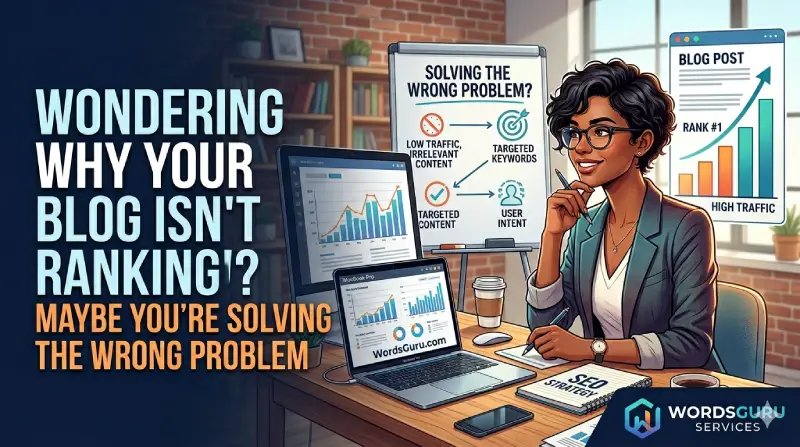
You check Google again. Same spot. Page four. Page five. Maybe you have stopped looking because it hurts too much. You put work into every post. You researched. You wrote. You hit publish and waited. Nothing. If you keep wondering why your blog isn’t ranking, the answer may not be what you’re thinking.
Most people chase the wrong fixes. They read some blog posts about meta descriptions and spend hours rewriting them. They hear keywords matter and stuff them everywhere until the writing is unreadable. When your blog not ranking on Google becomes your primary concern, chances are high that you are fixing things that were never broken in the first place.
Let us understand this better!
The Part of SEO Nobody Explains Well
Here is something that takes bloggers years to learn: When someone searches for something, they want something specific.
- Maybe they need instructions.
- Maybe they want to know which product to buy.
- Maybe they need a quick yes or no.
If your article does not give them that thing, they leave. And when many people leave fast enough, Google notices. This is usually why blog posts don’t rank even when the writing is solid and the keywords are there.
You might love what you wrote, but that’s not enough. Matching intent matters. Look at the top results for your term. What format are they using? Long guide? Quick list? Product comparison? Google is literally showing you the blueprint. Ignoring it is the perfect recipe for disaster.
The Mistakes We See Everywhere
Let us walk you through what keeps most sites stuck. First, it is about length. Data from Backlinko shows most first-page results run close to 1900 words. If you publish 400 words and call it done, you are not giving search engines enough to work with. This is one of those SEO mistakes bloggers make without realizing how much it hurts them.
Next comes writing. Suppose your sentences sound robotic; people will not engage with the content, which leads to a drop in rankings. Studies show that almost nobody clicks past that first page. If your writing is not up to the mark, you are placing yourself in a position where your target audience may never be able to find you.
Also, look at your links. Google ranking factors have always focused on who links to your content to check its authority. Outbound links also matter, which means you should link to solid sources to show how strong your research is. Sites that never work on links may not be as successful as they aim to be.
Small Changes in Your SEO Content Strategy That Actually Help
If you want to understand how to improve blog rankings, start with intent. Pick a tool like Ahrefs or Google Keyword Planner to understand what people actually like, and then write your content accordingly.
Your technical SEO approach also matters equally. Some blog ranking factors that may not seem important but can lead to your failure on search engines are:
- Broken links
- Slow load times
- Pages that don’t get indexed
- Lack of mobile-friendliness
How People Actually Read Online
If you want to know how to rank blog posts on Google, you should start by knowing how people read content online. They prefer conversational tones, articles that are easy to scan, and don’t feel like a giant wall of text.
So, keep paragraphs short, answer questions directly instead of beating around the bush, and add photos and videos where necessary. Remember, anything that keeps someone on your page for a longer time will help you improve your rankings.
Build Authority, Stick to a Theme
Stop writing articles and other kinds of content on random topics. Pick a theme and own it by publishing multiple posts around the same idea. Then, interlink these posts. This is one of the best ways to establish authority, and it shows Google that you actually know what you are talking about.
Also, focus on promoting your content by sharing it on various platforms. Your goal should be to ensure that the maximum number of people see it and link back to your content.
Write for Humans, Not for Machines
Stop trying to trick Google and emphasize writing for humans. The algorithm is just trying to give people what they want, and when you write accordingly, the rankings will start rising automatically.
Of course, you need keywords and formatting. But these things only support your content, which is the hero. So, the next time you wonder why a blog you wrote isn’t ranking, be honest with yourself.
Ask these questions:
- Is your content really helping anyone?
- Did you say something new?
- Did you make your content easy to read?
The Bottom Line
A good ranking on Google doesn’t happen overnight and requires you to add actual value. So, instead of wondering why your blog isn’t ranking, write something real and useful that helps the readers get what they are looking for easily. When you do this consistently, the traffic shows up eventually. Remember, Google just needs a reason to trust you, and you will be at the top of the SERPs.
Want to publish meaningful content that delivers actual value, helps you build authority, and rank better? Partner with WordsGuru Services for all your content writing needs!