
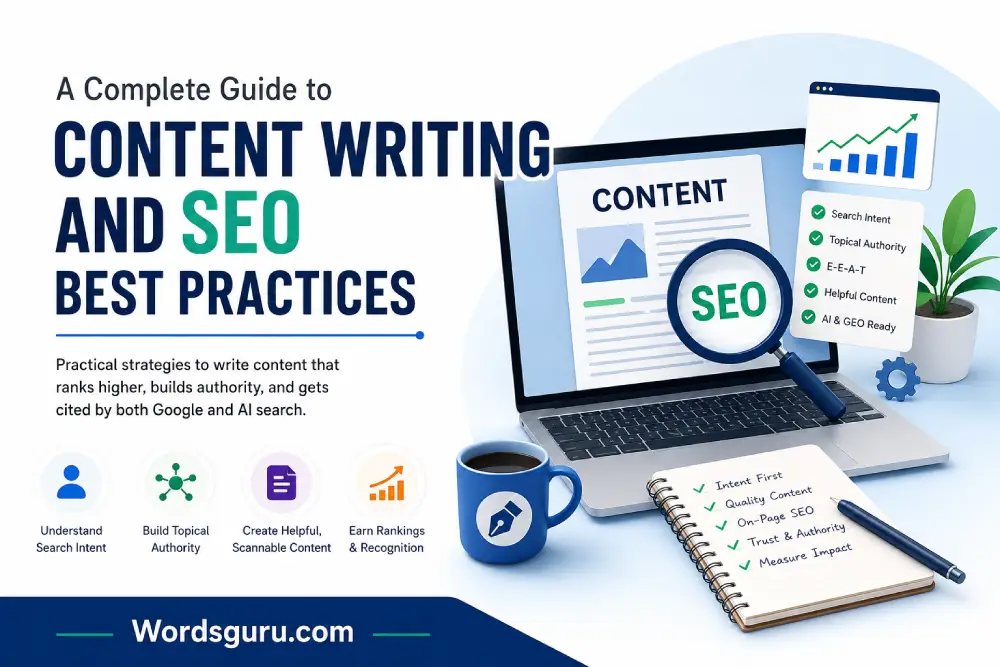
Quick answer: Content writing and SEO best practices involve aligning with user expectations. It even includes designing layouts for search algorithms, establishing complete niche expertise, and optimizing foundational metadata. Today, true SEO success goes beyond traditional ranking. It is about earning enough authority for both Google and AI search tools to cite your page as a trusted source. Producing superficial data no longer brings sustainable visibility.
Why Content Writing and SEO Best Practices Have Changed?
The old ways of optimizing web pages are officially gone. In the past, people simply stuffed paragraphs with keyphrases to rank higher in search engines. Search has split across multiple platforms like traditional Google, AI Overviews, ChatGPT, and Perplexity. Rather than keyword optimization, each platform now prioritizes search intent to evaluate and rank content. Succeeding in this landscape means writing for intent first and structuring your content so machines can easily find, extract, and cite your data.
Nine Essential SEO & Content Writing Best Practices
High search rankings require a systematic digital optimization strategy. The most effective content writing and SEO best practices are:
1-Start With Search Intent, Not Just Keywords
Understanding user motivation is the foundation of modern optimization. Before typing a single word, writers must identify what the audience wants to accomplish. Matching search intent ensures your page provides the exact solution the audience is looking for. Without this alignment, your traffic numbers will quickly drop as algorithms favor more relevant answers.
2-Build Topical Authority With Content Clusters
Publishing random articles rarely creates lasting visibility. Search engines prefer websites covering a subject in depth through connected pages. Building topical authority means creating one detailed pillar page supported by several related articles that explore smaller topics. This comprehensive approach proves your platform is a reliable source for readers and crawlers alike.
3-Write for AI Search, Not Just Google (GEO)
The advancement of AI technology has changed the way people gather information online. With the use of a generative engine optimization (GEO) approach, you can make your work compatible with the AI engines, which means it will be cited accurately.
AI engines favor content that:
1- Opens with a direct, scannable answer near the top of the page.
2- Uses plain, declarative sentences that automated summary tools can quote easily.
3- Cites specific facts and clear examples instead of making vague online claims.
4- Integrates authoritative data points to validate arguments immediately for automated scrapers.
5- Uses clean schema markup to build a highly machine-readable layout.
4-Use Semantic Keywords Naturally
Modern search tools evaluate semantic intent rather than literal keyword matches. They no longer just look for exact word matches in a paragraph. Successful SEO content writing requires using related terms that naturally support your main topic. This builds immediate topical depth for search crawlers while keeping the layout engaging for readers.
5-Structure for Scannability
Most online readers don’t read every word of a webpage from top to bottom. They start looking for the answers that solve their problems right away. Content writing best practices include using proper headings, concise paragraphs and bullet points. This makes it possible for your industry knowledge to get through instantly.
6-Master Basic On-Page SEO
High-quality text needs technical support to achieve top search rankings. Maximizing organic visibility requires optimizing your basic on-page SEO tags to guide both users and indexing crawlers safely.
Good writing won’t rank without proper optimization support. Build out your basic on-page SEO tags to maximize organic visibility by using:
1- Title tags containing your primary keyword within 50-60 characters.
2- Meta descriptions that earn clicks by matching user intent between 150 and 160 character limits.
3- Header hierarchies that reflect the logical flow of your content.
4- Internal links connecting your main pillars and related clusters.
5- Descriptive alt texts that stay completely natural.
7-Prove E-E-A-T on Every Page
Trustworthiness is an essential factor for ranking well in today’s online world. Search engines check the Experience, Expertise, Authoritativeness, and Trustworthiness in order to protect the interests of the users. It is very important to have high E-E-A-T by making clear who the author is and what their credentials are.
8-Match Format to Funnel Stage, and Keep Content Fresh
Not every piece of writing should follow the same template. You must match the length and depth to the user journey. A solid content strategy requires short guides for beginners and detailed breakdowns for buyers. Diversifying your depth in this way ensures you satisfy readers at every distinct phase of their research process.
9-Measure Recognition, Not Just Rankings
It’s no longer enough to track your rank the traditional way and measure your success based on it. Many users don’t click through to websites as AI tools provide direct answers to their questions. To successfully execute SEO best practices 2026, it is crucial to measure how often AI models cite your brand name. This shift changes how you accurately evaluate your overall online marketing success.
Common Mistakes to Avoid
A few errors will quietly kill your content strategy before you notice. They are:
1- Writing for keywords instead of intent results in irrelevant articles.
2- Keyword stuffing, rather than natural variation, creates robotic-sounding text.
3- Skipping structural layouts pushes readers and AI engines away.
4- Letting content go stale can quickly destroy your organic search rankings.
5- Treating GEO and SEO as separate jobs creates unnecessary, repetitive work.
FAQs
- What are the key SEO best practices 2026?
The key SEO best practices 2026 are:
1- Matching search intent
2- Creating topical authority
3- Ensuring strong E-E-A-T
- What distinguishes SEO content writing from regular content writing?
SEO content writing focuses on search intent and keyword usage. Its overall layout helps readers and search engines easily find your content.
- What is GEO, and how does it relate to SEO?
While traditional SEO focuses on ranking websites in standard search engine results, GEO goes beyond that. It optimizes content specifically to be cited and recommended by AI-powered search engines. These include platforms like Perplexity, ChatGPT, and Google AI Overviews.
- What keyword density is ideal for SEO content writing?
To achieve effective SEO content writing, keep your keyword density roughly between 2-3% for the focus keyword and its close variants.
Final Thoughts
The fundamentals of good SEO content haven’t disappeared. They have expanded. Clear writing, accurate information, and logical structure still win. You can optimize your website using traditional methods while keeping it up to date with AI readiness. This dual approach helps your site withstand any algorithmic changes. Ultimately, core content writing and SEO best practices involve putting your readers first. They also ensure clarity, authority, and structure. By following these, you can build topical authority, attract your target audience, and boost organic conversions.
Looking for digital content that actually converts? WordsGuru engineers high-impact content strategies that dominate both traditional Google and emerging AI search channels. Let’s scale your visibility. Get in touch today!